


If you’ve ever looked at a chain-link fence, a piece of industrial ductwork, or those sturdy silver-grey water pipes in an older basement, you’ve seen galvanized steel. It’s a workhorse of a material, but it’s often misunderstood. Most people treat it like stainless steel or raw iron, but that’s a mistake that can lead to a rusted-out mess in just a few months.
The secret to galvanized steel is the zinc. To make galvanized metal, manufacturers dip steel into a molten bath of zinc. This creates a “sacrificial” layer galvanizing coating—meaning the zinc will corrode and take the hit from the environment so the steel underneath doesn’t have to. When you clean it, your number one job is to keep that zinc layer intact. If you scrub it away or dissolve it with the wrong chemicals, you’ve just turned your durable metal into a piece of scrap waiting to rust.
Here is a deep dive into the right way to handle this material, whether you’re polishing up a decorative piece or maintaining plumbing.
The Standard Approach: Keeping it Simple
For the vast majority of cleaning jobs, you really don’t need fancy industrial chemicals. In fact, the “best” way to clean galvanized metal is usually the simplest one. If you’re just dealing with everyday dust, dirt, or mud, stick to the basics.
What you’ll need:
Warm water
A mild, pH-neutral dish soap
A soft nylon-bristled brush (avoid anything with metal bristles)
A microfiber cloth
Start by rinsing the surface with plain water to get rid of loose debris. Then, mix a bit of soap into a bucket of warm water and go to work with the nylon brush. Scrub in circular motions, focusing on areas where grime has built up. The reason we use nylon is that it’s tough enough to move dirt but soft enough that it won’t leave micro-scratches in the zinc coating. Once you’re done, rinse it thoroughly.
The Golden Rule: Never let galvanized steel air-dry if there are puddles of water sitting on it. Standing water is the enemy. Grab a clean towel and dry it immediately. If you don’t, you might see “white rust” (zinc hydroxide) forming within 24 hours.
Tackling Grease, Oil, and Adhesive
Sometimes, soap and water won’t cut it—especially if you’re cleaning galvanized pipes that have been in a garage or an industrial setting. You might find thick grease or sticky residue from old tape.
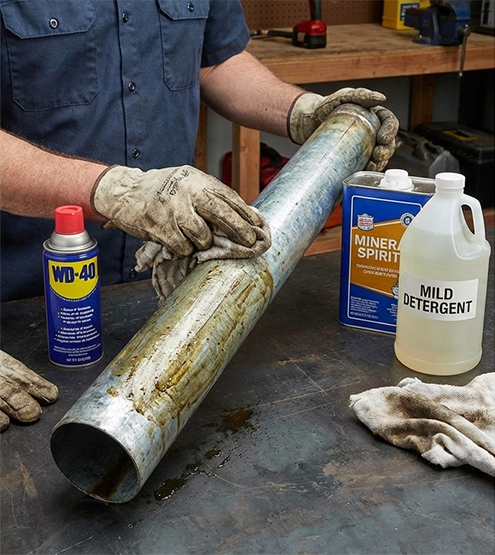
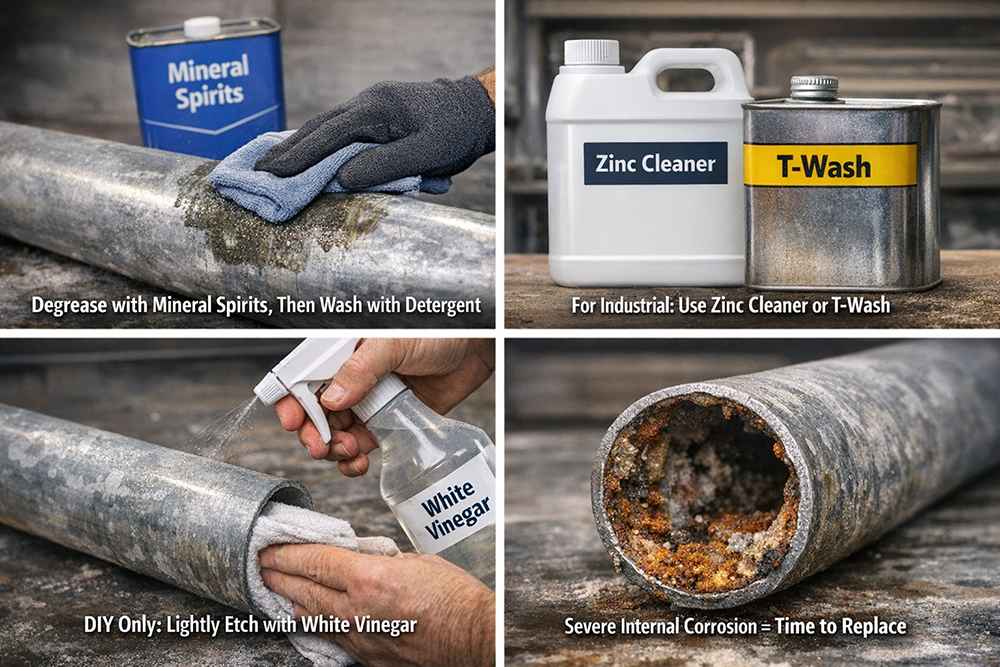
In this case, skip the abrasives and reach for a solvent. Mineral spirits or even a quick spray of WD-40 works wonders here. Apply the solvent to a soft rag, not directly to the metal, and rub the affected area. Use mineral spirits, then wash with mild detergent to remove solvent residue.This dissolves the organic compounds in the grease without reacting with the zinc. Once the grease is gone, make sure to wipe the area down with a damp cloth to remove any leftover solvent, then dry it.
Specialized Care for Galvanized Pipes
Cleaning galvanized pipe is a slightly different animal. If you’re dealing with the exterior of the pipe—perhaps because you want to paint it—you need to “etch” the surface. New galvanized metal has a very slick, oily coating (often a passivate layer) that makes paint peel right off.
To clean and prep the exterior of a pipe for painting, many pros use white vinegar.But vinegar only for small DIY items.If you are industrial project best use dedicated zinc cleaner / T-wash.The mild acetic acid in vinegar helps strip away that slickness and slightly roughens the zinc so the paint can grab hold.
If you leave vinegar (or any acid) on the pipe for too long, it will begin to eat the zinc. You’ll know the reaction is happening because the metal will start to fizz and release hydrogen gas. Use it sparingly!
For the interior of galvanized pipes, things are trickier. If your water pressure is low due to mineral buildup inside the pipe, cleaning it is rarely a permanent fix. Because the interior is constantly exposed to water, the zinc eventually wears out, and the “cleaning” process often just exposes the rust underneath. In most cases, if a galvanized pipe is clogged on the inside, it’s a sign that the pipe is reaching the end of its life.
How to Fix “White Rust” and “Red Rust”
If you’ve left your galvanized metal out in the rain or stored it in a damp shed, you might see a white, chalky powder on the surface. This is white rust. It’s not “true” rust (which is iron oxide), but it is a sign that the zinc is working overtime to protect the steel.
To remove it, use a mixture of one part white vinegar and two parts water. Scrub gently with your nylon brush until the white powder is gone. Rinse it well and dry it. If the surface looks a bit dull afterward, that’s normal—the zinc has just oxidized.
However, if you see red rust, the situation is more serious. Red rust means the zinc is gone and the steel is actively corroding. At this point, you have to remove the rust with a wire brush or sandpaper, but you must “repair” the hole you’ve made in the protection. After cleaning off the red rust, apply a cold galvanizing spray (a zinc-rich primer). This effectively “patches” the suit of armor and prevents the rust from spreading.
The “Never” List: What to Avoid
To keep your galvanized metal looking good for years, stay away from these three things:
Steel Wool and Wire Brushes: These are made of carbon steel. They leave behind tiny particles of iron embedded in the zinc. Those particles will rust almost instantly, making it look like your galvanized metal is failing when it’s actually just the leftover bits of your cleaning tool.
Muriatic or Hydrochloric Acid: These are often used to clean bricks or concrete, but they are “zinc killers.” They will strip the galvanization off in seconds, leaving the raw steel completely defenseless.
Bleach: While great for killing mold, bleach is highly corrosive to non-ferrous metals like zinc. It can cause pitting and permanent discoloration.
Final Maintenance Tip
Galvanized steel loves airflow. The best way to keep it clean and rust-free is to ensure it stays dry and has plenty of circulation. If you’re storing galvanized pipes or sheets, never stack them flat against each other if they are wet; always use spacers to let the air get between them.
With a little bit of mild soap, a nylon brush, and a commitment to keeping things dry, your galvanized steel products can easily last 50 years or more.
Post time: Feb-03-2026


