


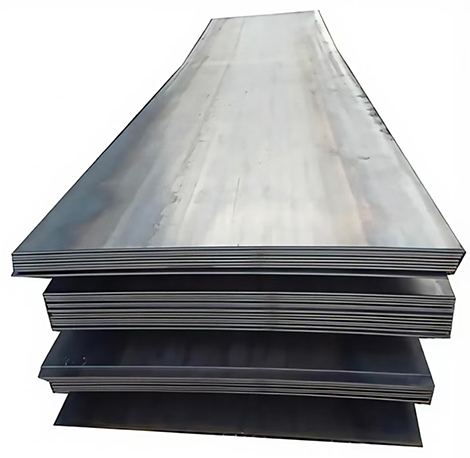
When we think of high-tech materials, we often jump to titanium alloys, carbon fiber, or gleaming stainless steel. However, the backbone of our modern world is actually far more modest: plain carbon steel. Accounting for roughly 85-90% of global steel production, this alloy is the “workhorse” of industry. But what exactly makes “plain” carbon steel so vital, and what are the fundamental truths about its nature?
The Simplicity of the Alloy
The word “plain” indicates that this steel contains only small amounts of alloying elements. It does not have high levels of chromium, nickel, or molybdenum, which are commonly added to specialty steels. Instead, it is almost entirely an alloy of iron and carbon. Small amounts of manganese and silicon are present, yet carbon primarily controls the steel’s properties.
The most important truth about plain carbon steel is the inverse relationship between strength and ductility. As you increase the carbon, the steel becomes harder and stronger, but it also becomes more brittle and harder to weld.
A Spectrum of Strength
Engineers generally categorize plain carbon steel into three groups based on their carbon “signature”:
Low Carbon Steel (Mild Steel): Containing up to 0.25% carbon, this is the most common variety. We often use it for automobile body panels and structural beams in skyscrapers.And it ideal for large-scale construction and steel tube manufacturing. Its “truth” lies in its incredible ductility; you can bend, twist, and weld it without it snapping.
Medium Carbon Steel: With 0.25% to 0.6% carbon, this version strikes a balance. The material provides sufficient strength for railway tracks and gears, combining wear resistance with the ability to endure heavy vibration without cracking.
High Carbon Steel: Typically contains 0.6% to about 1.2–1.4% carbon ,this metal is exceptionally hard. Using high carbon steel makes your kitchen knives,drill bits,and springs possible. The material holds a sharp edge much longer than mild steel.Proper heat treatment is required. Without proper treatment, impact toughness drops significantly.
The Trade-off: The Rust Factor
One of the most unavoidable truths about plain carbon steel is its vulnerability to the environment. Stainless steel forms a protective chromium oxide layer.Plain carbon steel does not and reacts easily with oxygen and moisture. Without a protective coating—such as paint, oil, or a zinc layer (galvanization)—it will eventually return to its natural state: iron oxide, or rust.
For structural applications, its true value lies in:
- Predictable behavior
- Standardized grades
- Efficient fabrication
- Global availability
From building frames to steel pipe networks, plain carbon steel remains the unsung hero of modern structural engineering.
Why It Still Wins
Why is plain carbon steel still widely used, despite rusting and being less tough than exotic alloys? The answer is economics and recyclability. Plain carbon steel is significantly cheaper to produce than any other metal with comparable strength.
To extend service life, structural steel pipes are commonly protected by:
- Painting or coating
- Oiling for temporary storage
- Galvanization (zinc coating) for outdoor and humid environments
With proper surface treatment, plain carbon steel pipes can perform reliably for decades.
Furthermore, it is one of the most recycled materials on earth. A steel beam from a 1920s warehouse can be melted and reused as a 2026 car chassis.The quality remains unchanged.
Conclusion
Plain carbon steel demonstrates that more complex materials are not always better in engineering applications. A small change in carbon content in iron can produce anything from soft wire to large bridge supports. It is a material defined by balance—trading corrosion resistance for affordability, and ductility for strength.
Post time: Jan-15-2026


