


Steel materials used in the Middle East and Southeast Asia operate under demanding conditions. These regions present a combination of intense heat, high humidity, and extended project timelines. In many construction and light industrial endeavors, purchasers look for the ideal mix of corrosion resistance, reliable quality, and affordability. Under these conditions, pre-galvanized steel pipe has emerged as a prevalent choice.
This article explains what pre-galvanized steel is. It describes how it is made and why it is popular. This steel is used in Saudi Arabia, the Gulf region, and Southeast Asia.
Understanding Pre-Galvanized Steel
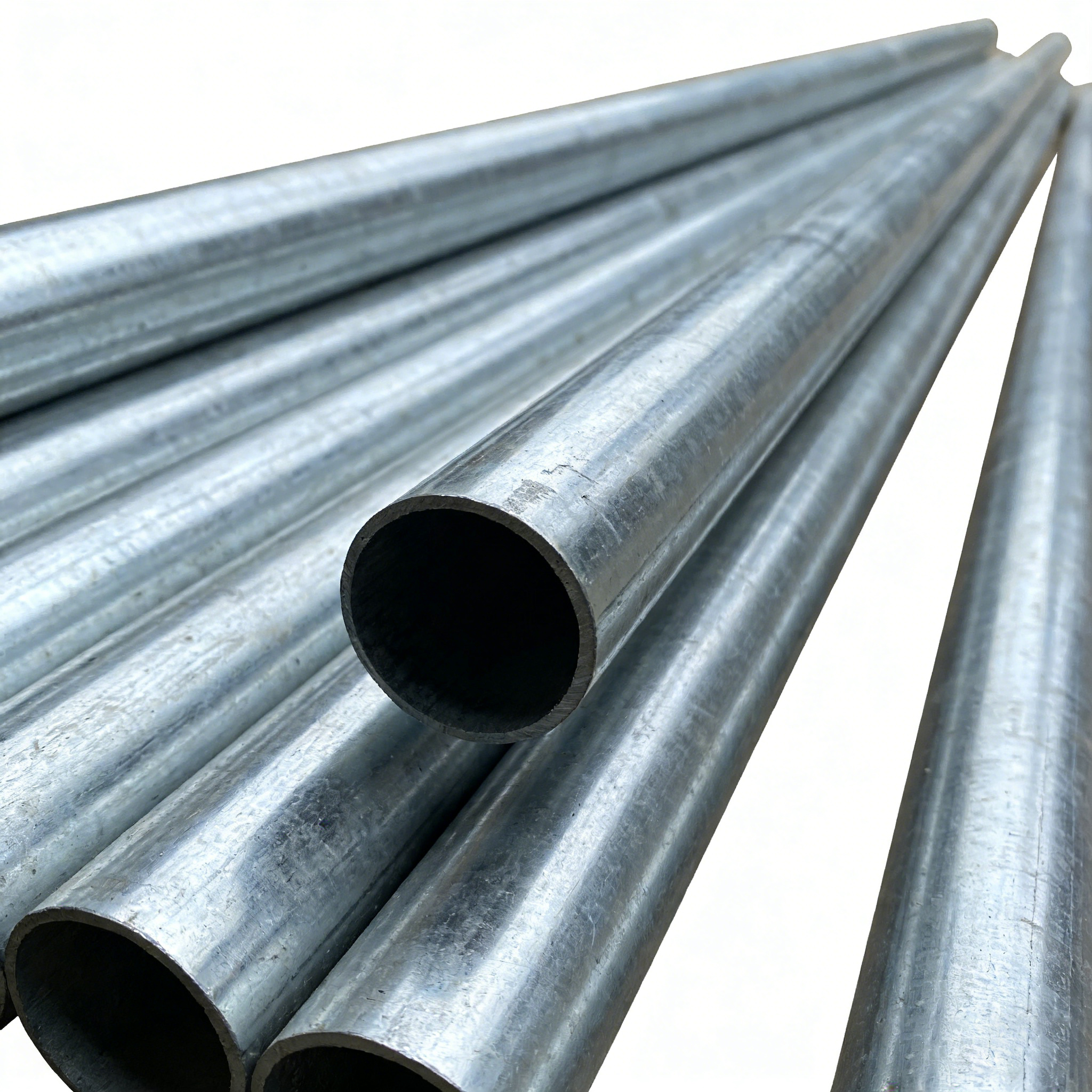
Pre-galvanized steel is steel that receives a zinc coating before being formed into its final product shape. Steel mills galvanize the steel at an early stage, while it remains in coil or sheet form. After coating, producers fabricate it into pipes, tubes, profiles, or panels with no need for extra surface treatment.
For buyers, especially those sourcing large volumes, this translates to more uniform quality and fewer processing steps during manufacturing.
Manufacturing Process
Pre-galvanized steel is produced via a continuous hot-dip galvanizing line. Manufacturers clean and heat the steel coils, then dip them into molten zinc in a controlled production line. This continuous method ensures a consistent zinc coating across the entire surface.
After coating, manufacturers cool the steel and may rewind it into coils, preparing it for further fabrication.
This process is efficient. It helps manufacturers supply large volumes. It also keeps delivery schedules stable. These factors are important for international projects and export buyers.
The Importance of Zinc Coating in These Regions
Zinc coating protects steel. It is especially important in areas with high humidity or large temperature changes.
In Southeast Asia, persistent moisture and heavy rainfall elevate corrosion risks. Steel surfaces in the Middle East face daily and seasonal temperature changes. Wind can carry sand and dust, which may damage the steel.
Zinc protects steel in two main ways. First, it creates a physical barrier that keeps air and moisture away from the steel. Second, it acts as sacrificial protection.
The zinc layer corrodes first, protecting the steel underneath. This protection makes pre-galvanized steel ideal for indoor spaces and covered outdoor areas.
Performance Advantages for International Projects
For global buyers and contractors, pre-galvanized steel offers several practical benefits, particularly for projects demanding standardized materials and efficient installation:
Uniform Coating: Ensures consistent appearance and protection across large batches.
Reduced Processing: Eliminates or minimizes the need for on-site or post-fabrication surface treatment.
Ease of Fabrication: Facilitates standard forming, cutting, and welding operations.
These features help streamline production planning, control costs, and maintain quality consistency across multiple project shipments.
Common Applications in Industry and Construction
Pre-galvanized steel sees extensive use in light industrial and building projects throughout the target regions. Typical applications include:
HVAC Systems: Ductwork and components.
Electrical Installations: Cable trays, conduit, and support systems.
Building Framing: Light gauge steel sections for interior partitions and non-structural elements.
General Fabrication: Storage systems, equipment supports, and indoor structural components.
These applications take advantage of the steel’s ready-to-use surface and consistent performance. They are also cost-effective, especially in areas with limited exposure to the elements.
Why It Fits Construction Needs
Construction projects often prioritize material efficiency alongside structural performance. Pre-galvanized steel performs well in indoor spaces, warehouses, commercial buildings, and covered structures. Pre-galvanized steel works well with precast and modular construction methods. These building approaches are becoming increasingly popular in fast-growing economies.
The steel comes pre-coated, which simplifies work on-site. This reduces labor time and allows projects to stay on schedule.
Pre-Galvanized vs. Hot-Dip Galvanized Steel
While both materials utilize zinc for protection, their applications differ.Manufacturers coat pre-galvanized steel before fabrication. This creates a thinner but so uniform zinc layer. Producers coat hot-dip galvanized steel after fabrication. This creates a thicker layer that provides stronger protection in harsh, fully exposed outdoor environments.
For many indoor or semi-sheltered applications, pre-galvanized steel provides adequate corrosion resistance with greater cost efficiency. Engineers usually choose hot-dip galvanizing for projects that need long-lasting durability in harsh outdoor conditions.
A Reliable Choice for Regional Markets
Pre-galvanized steel remains a practical and dependable material solution for buyers in the Middle East and Southeast Asia. Pre-galvanized steel provides enough corrosion protection for many applications. It also helps manufacturers maintain efficiency and control costs. Manufacturers and contractors continue to trust pre-galvanized steel for projects that require consistent quality, steady supply, and compliance with standard specifications.
Post time: Jan-05-2026


