


JCOE steel pipes serve critical roles across heavy industries due to their high strength and large diameters. These pipes are particularly valuable in shipbuilding, boiler manufacturing, and petrochemical plants. Their unique forming process allows for even stress distribution, greatly improving structural stability.
In shipbuilding, they reliably handle high pressure and dynamic loads. Within boilers, they contribute to both efficient heat transfer and operational safety. This durability makes them a preferred choice where safety cannot be compromised.
Material selection directly dictates performance. Commonly used steel grades include Q235, Q345, and 16Mn. Each grade offers a distinct balance of strength, ductility, and weldability. When compared to other methods like UO forming, JCOE pipes generally provide superior mechanical properties. Their higher tensile strength and improved fatigue resistance suit high-stress environments perfectly.
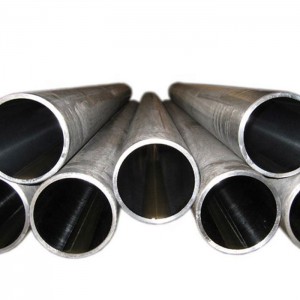
The JCOE process specifically addresses challenges in large-diameter, thick wall pipe production. It achieves accurate bending without sacrificing wall thickness. Modern innovations like CNC-controlled machines have enhanced precision and consistency. These technical advances reduce material waste and minimize deformation.
Economically, JCOE pipes provide significant benefits for large-scale projects. The process generates less waste material than traditional methods. Faster production cycles also contribute to lower overall costs. Their uniformity further simplifies installation, saving valuable labor time and reducing on-site errors.
Stringent quality control is essential for optimal performance. Key checks involve weld strength, wall thickness uniformity, and bending precision. Compliance with international standards guarantees reliability in extreme conditions. Consistent quality extends service life while reducing long-term maintenance costs.
Global demand for these pipes continues rising, driven by expanding infrastructure and energy projects. Advances in steel alloys now enable larger diameters and thicker walls. Automation and digital oversight are shaping the future, allowing for more precise and cost-effective production. JCOE pipes are therefore expected to remain central to large-scale engineering.
In summary, JCOE pipes combine strength, versatility, and cost-efficiency. Milder steel grades ease fabrication, while high-strength variants meet demanding requirements. Understanding their properties and advantages allows stakeholders to secure both performance and long-term value.
Post time: Dec-12-2025


