

In the global steel trade, the phrase “ISO 9001 Certified” is so common that it’s often dismissed as just another line in a company brochure. However, for a procurement officer managing a multi-million dollar pipeline project or a structural engineer responsible for public safety, this certification is the only thing standing between a successful project and a catastrophic failure.
At Yuantai Derun Group, we view ISO 9001 not as a trophy on the wall, but as a dynamic risk-management system that governs every spark in our factory. Here is why choosing an ISO 9001 certified manufacturer changes the game for your supply chain.
The Consistency Crisis: The True Cost of “Uncertified” Steel
The biggest hidden cost in construction isn’t the price of the steel; it’s the cost of inconsistency. Imagine receiving a shipment of 500 hollow sections. The first 100 are perfect, but the next 50 have inconsistent R-angles or weld seams that fail under pressure. This inconsistency halts production, delays installation, and inflates labor costs.
This is where the ISO 9001 Quality Management System proves its value. It forces a manufacturer to move from “passive inspection” to “active prevention.” In our ERW and LSAW production lines, the system ensures that every operator follows the exact same calibrated process, shift after shift. We don’t just hope for a good batch; we engineer the process so that a bad batch becomes statistically impossible.
Traceability: Every Pipe Has a “Digital Passport”
In high-stakes infrastructure—like modern smart piping systems—traceability is non-negotiable. If a structural issue is detected on-site years after installation, can your supplier tell you which raw material batch was used? Can they identify the specific welding parameters used on that specific afternoon?
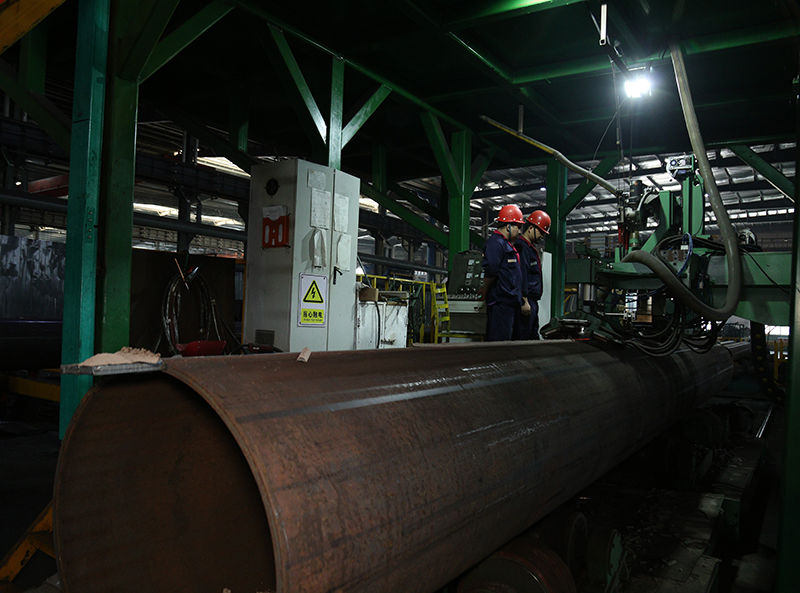
We achieve true reliability through the synergy between global quality standards and our factory’s rigorous execution. While ISO 9001 provides the management framework, our facility brings it to life through a ‘Digital Passport’ system for every pipe. This integration allows us to trace any single tube back to its original heat number, raw steel chemical composition, and the specific inspector who verified it. It is this bridge between international systems and our internal accountability that provides global buyers with the transparency they need for every meter of steel we export.
Why Global Markets Demand ISO Compliance
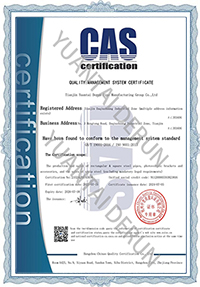
If you are looking to supply projects in Europe, the Middle East, or Southeast Asia, ISO 9001 is the mandatory “entry ticket.” Most government-backed infrastructure projects will not even allow a supplier to bid without verified QMS documentation.
This isn’t just bureaucracy. It’s a global language of trust. When an engineer in a different country sees the ISO 9001 seal, they know the manufacturer speaks the same language of precision, corrective actions, and continuous improvement. It bridges the gap between different technical cultures, ensuring that a steel pipe manufactured in our plant meets the exact safety expectations of a project in Berlin, Dubai, or Singapore.
Beyond the Certificate: The Yuantai Derun Standard
While many factories hold the certificate, very few live by its principles. We integrate ISO 9001 with specific technical standards like ASTM A500 and API 5L. Our commitment to “Continuous Improvement” has led us to invest in AI-driven defect detection and high-precision testing equipment that goes beyond the basic requirements of the certification.
In the end, you aren’t just buying steel; you are buying the certainty that your project will stand the test of time. Reliability is a choice. Ensure your next project is backed by ISO 9001 rigor.
Post time: Mar-19-2026


