

Key Takeaways for Buyers and Engineers
Choosing the right steel pipe manufacturing process is essential for offshore structures, piling projects, marine construction, and other heavy engineering applications. LSAW steel pipes, SSAW steel pipes, and seamless steel pipes are all widely used in industrial projects, but each manufacturing method offers different advantages in terms of diameter range, wall thickness, structural performance, cost efficiency, and application suitability.
Seamless steel pipes are manufactured without a welded seam and provide excellent pressure resistance, making them suitable for high-pressure systems and specialized mechanical applications. SSAW steel pipes offer excellent flexibility for large diameter production and are widely used in pipelines, water transmission, and general infrastructure projects. However, for applications requiring heavy wall thickness, strict dimensional control, and reliable performance under dynamic loading conditions, LSAW steel pipes are often selected for offshore piling, jacket structures, and large structural tubular applications.
JCOE LSAW pipes, manufactured through plate forming, longitudinal submerged arc welding, and mechanical expansion processes, provide advantages in diameter capability, wall thickness control, weld inspection, and fabrication accuracy. These characteristics make them a preferred solution for many offshore, marine, and heavy structural projects where long-term reliability and precise installation are critical.
Introduction: Why Steel Pipe Selection Matters in Heavy Engineering
From subsea structures to heavy civil foundations, high-load steel pipe carries both structural stress and project risk. Selecting the optimal pipe type early on directly directly dictates fabrication throughput, field efficiency, and bottom-line project costs.
To balance performance with overall project CAPEX, engineering and procurement specialists typically benchmark three key large-diameter manufacturing methods:
Every manufacturing process leaves a distinct footprint on structural performance.
Need raw pressure resistance? Seamless leads the class. Need massive diameters on a manageable budget? SSAW delivers. But for heavy-duty structural applications where wall thickness, precision, and fatigue endurance take priority, LSAW consistently takes top spot.
Looking beyond the initial unit price to these structural fundamentals is what separates a successful procurement strategy from an expensive field modification.
1. Manufacturing Process and Structural Characteristics
Seamless Steel Pipe: High Pressure Performance for Specialized Applications
Manufactured from a solid steel billet via hot-rolling or cold-drawing, seamless steel pipe delivers exceptional structural integrity with zero weld seam weaknesses.
Key benefits and applications include:
l Unmatched Pressure Containment: Ideal for critical oil & gas lines and high-pressure hydraulic equipment.
l Uniform Strength: Consistent mechanical properties around the entire circumference.
The Challenge with Large Structural Projects:
While seamless pipe excels in high-pressure environments, manufacturing large-diameter, heavy-wall seamless tubulars requires complex, high-cost processing. For large-scale marine infrastructure, offshore foundation piling, and structural steel framing, welded pipe technologies provide a significantly more cost-effective alternative—delivering precise custom sizes and wall thicknesses without compromise.
SSAW Steel Pipe: Efficient Solution for Large Diameter Projects
SSAW steel pipes—are produced by spirally forming hot-rolled steel coils and executing double-sided submerged arc welds along the helical seam.
Because the spiral forming method allows wide-diameter pipes to be produced from narrower steel coils, SSAW technology offers exceptional size versatility and high-volume production efficiency. This makes it an extraordinarily cost-effective choice for large-scale, long-distance infrastructure projects.
Primary SSAW pipe applications include:
l Long-distance water transmission mains
l Marine dredging and slurry discharge lines
l Municipal civil utility infrastructure
l Low-to-medium stress piling and structural foundations
While SSAW shines in manufacturing speed and large-diameter scalability, its defining feature is the continuous spiral seam. Because helical welds are longer than straight longitudinal welds, they exhibit distinct stress distribution patterns that require careful engineering review in high-fatigue or dynamic loading environments.
When project specifications call for ultra-heavy wall thicknesses, razor-thin dimensional tolerances, or resistance to severe cyclic loading, engineers typically transition from SSAW to LSAW (Longitudinal Submerged Arc Welded) solutions.
LSAW Steel Pipe (JCOE): A Preferred Solution for Heavy Structural Applications
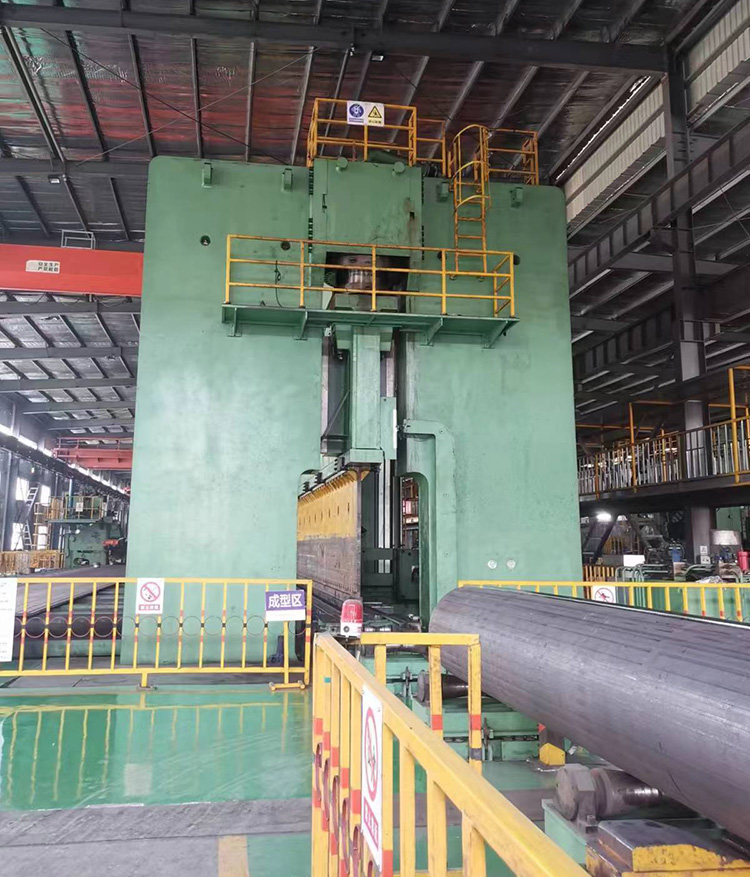
LSAW (Longitudinal Submerged Arc Welded) steel pipes are fabricated from heavy single steel plates utilizing the JCOE cold-forming method—where the plate is progressively shaped into a ‘J‘, ’C‘, and ‘O‘ profile prior to double-sided submerged arc welding and full-length mechanical expansion.
Standard JCOE Manufacturing Workflow:
Steel Plate Inspection → Progressive JCOE Forming →Internal & External SAW Full-Length Mechanical Expansion → NDT & Final Inspection
Compared to coil-based SSAW pipe, the plate-based JCOE process allows for superior metallurgy control, precise wall thickness management, and unmatched structural performance.
Key Technical Advantages of JCOE LSAW Pipe:
Ultra-Heavy Wall Thickness: Depending on steel grade and design codes, JCOE LSAW pipes can easily exceed 50mm in wall thickness, making them the premier choice for offshore wind foundations, tubular jackets, and heavy load-bearing structural piles.
Single Straight Weld Seam: The longitudinal weld configuration greatly simplifies Nondestructive Testing (NDT), streamlines shop fabrication control, and speeds up field girth welding during installation.
Mechanical Expansion & Precision: The final mechanical expansion step eliminates internal residual stress while delivering exceptional roundness and straightness—a crucial factor for seamless pipe-to-pipe fit-up in offshore marine environments.
2.LSAW vs SSAW vs Seamless Steel Pipe Comparison
|
Technical Parameter |
Seamless Steel Pipe |
SSAW Steel Pipe |
LSAW Steel Pipe (JCOE) |
|
Manufacturing Process |
Billet piercing and rolling |
Spiral forming from steel coil |
Heavy plate forming and longitudinal welding |
|
Weld Seam |
None |
Spiral weld seam |
Single longitudinal weld seam |
|
Diameter Capability |
Mainly small and medium diameter applications |
Up to approximately Ø4020mm depending on manufacturer capability |
Commonly Ø406mm and above depending on production capability |
|
Wall Thickness Capability |
Medium to heavy wall |
Generally limited by coil thickness |
Heavy-wall capability, 50mm+ depending on specification |
|
Dimensional Control |
High precision |
Moderate (Influenced by raw coil tolerance) |
Superior (Optimized by full-length mechanical expansion) |
|
Typical Applications |
Pressure systems, mechanical equipment |
Water pipelines, dredging, infrastructure |
Offshore piling, marine structures, heavy engineering |
3.Why LSAW Is Widely Selected for Offshore and Heavy Structural Projects
For offshore and heavy structural projects, the selection of steel pipe is usually based on the combination of structural performance, installation requirements, and lifecycle reliability.
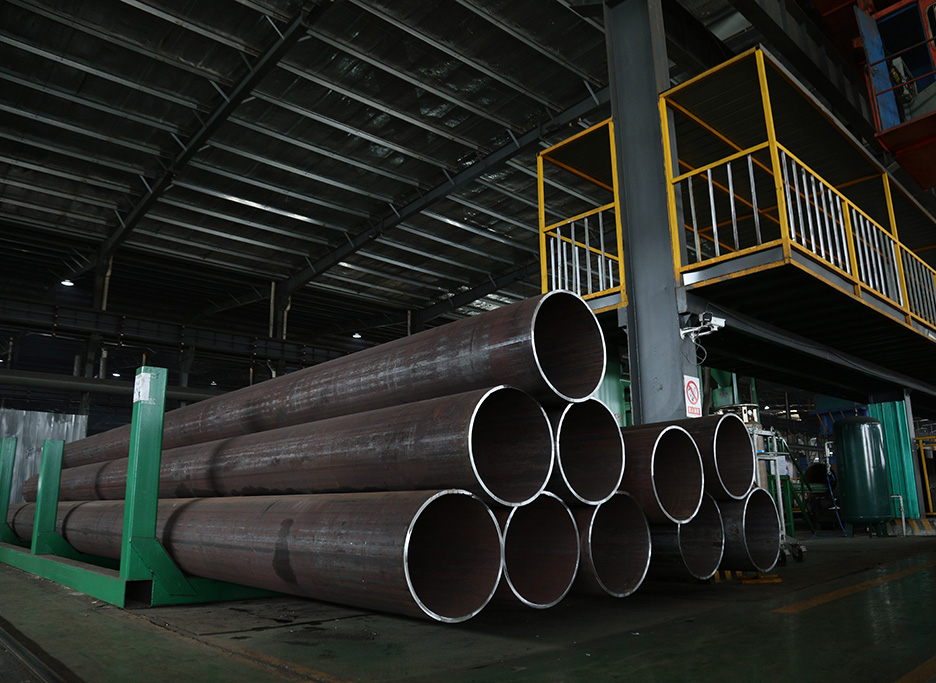
LSAW steel pipes are often selected for demanding applications because they provide several advantages.
Heavy Wall Capability for Dynamic Loading
Offshore structures are exposed to continuous environmental loads, including wave action, wind forces, and cyclic stress.
Pipe piles and jacket structures must maintain structural integrity over decades of service. Heavy wall LSAW pipes provide the required sectional strength and stiffness for these demanding environments.
Compared with standard pipeline applications, offshore structural components often require greater control over wall thickness, material grade, and mechanical properties.
Improved Fabrication Accuracy for Offshore Installation
Offshore installation involves strict requirements for pipe alignment, welding preparation, and field assembly.
Pipe end accuracy and roundness directly affect welding efficiency during installation. The mechanical expansion process used for JCOE LSAW pipes helps improve dimensional consistency, allowing better fit-up during fabrication and offshore construction.
For EPC contractors, this can reduce installation difficulties and improve overall project efficiency.
Suitable Standards and Quality Requirements
Depending on application requirements, LSAW steel pipes may be supplied according to different international standards, including:
- EN 10210 for hot-finished structural hollow sections
- EN 10219 for cold-formed welded structural hollow sections
- API 5L for pipeline applications
- ASTM specifications
- Project-specific offshore requirements
For European infrastructure and offshore projects, buyers typically require detailed quality documentation, including:
- EN 10204 3.1 Mill Test Certificates
- Third-party inspection according to project requirements
- Ultrasonic testing (UT)
- Additional NDT methods when specified
- Impact testing for low-temperature applications
Steel grades commonly selected for demanding structural applications include S355 and S460 series depending on design requirements.
4. How Buyers Should Evaluate an LSAW Steel Pipe Supplier
When purchasing heavy wall LSAW steel pipes, buyers should evaluate more than production capacity and price.
A reliable supplier should be able to provide:
Manufacturing Capability
Confirm whether the manufacturer has suitable equipment for:
- Required diameter range
- Required wall thickness
- Required steel grades
- Large project quantities
Quality Control System
Important inspection procedures include:
- Chemical composition verification
- Mechanical property testing
- Weld inspection
- Dimensional inspection
- Hydrostatic testing when required
- Non-destructive testing
Certification and Documentation
For international projects, buyers should confirm:
- Applicable standards
- Inspection certificates
- Traceability system
- Third-party inspection capability
For European customers, complete documentation support is often as important as the physical product itself.
Frequently Asked Questions About LSAW, SSAW and Seamless Steel Pipe
Q1:What is the main difference between LSAW and SSAW steel pipes?
A1:The main difference is the weld configuration and manufacturing method. LSAW pipes are produced from steel plates with a longitudinal straight weld, while SSAW pipes are produced from steel coils with a spiral weld. LSAW is often preferred for heavy structural applications requiring strict dimensional control and heavy wall thickness.
Q2:Is LSAW better than SSAW for pipe piling?
A2:Both LSAW and SSAW can be used for piling applications depending on project requirements. However, for offshore foundations, jacket structures, and fatigue-critical projects, LSAW is frequently selected because of its heavy-wall capability, straight weld configuration, and dimensional accuracy.
Q3:What wall thickness can JCOE LSAW pipes achieve?
A:3JCOE LSAW pipes can achieve wall thickness exceeding 50mm depending on pipe diameter, steel grade, and manufacturer capability.
Q4:Which standards are commonly used for LSAW structural pipes?
A4:Depending on the application, LSAW pipes may comply with EN 10210, EN 10219, API 5L, ASTM specifications, or project-specific requirements.
Conclusion: Selecting the Right Pipe for Long-Term Project Reliability
Choosing between LSAW, SSAW, and seamless steel pipe requires careful consideration of engineering requirements, operating conditions, and project standards.
Seamless pipes remain an excellent choice for high-pressure applications. SSAW pipes provide an economical solution for many large-diameter infrastructure projects. However, for heavy structural applications, offshore piling, and marine engineering projects requiring heavy wall thickness and precise fabrication control, JCOE LSAW steel pipes are often the preferred solution.
With advanced manufacturing technology, strict quality control, and compliance with international standards, reliable LSAW pipe suppliers can help EPC contractors and project owners reduce risks and achieve long-term structural performance.
Need heavy wall LSAW steel pipe specifications for your next offshore or structural project? Contact YUANTAI DERUN GROUP for detailed specifications, certification documents, and project support.
Available specifications:
- Diameter: Ø406mm–1422mm
- Wall thickness: Up to 50mm+
- Steel grades: S355 / S460
- Inspection: UT, NDT
Post time: Jul-30-2026


