

Heavy Duty Structural Steel Tubing for Modern Megaprojects
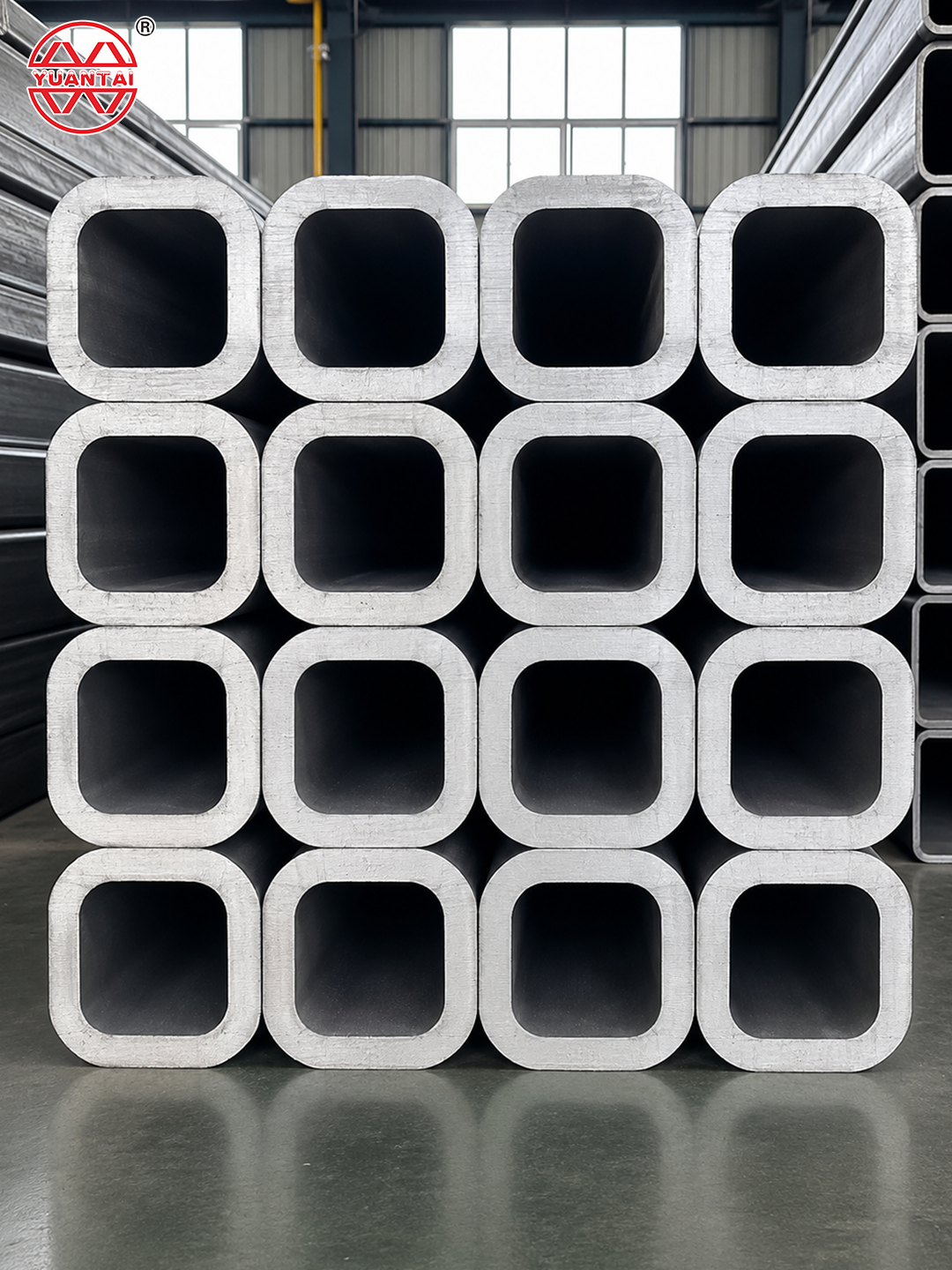
In international infrastructure development, global structural steel tubing suppliers face surging demands for larger profiles. As large-scale projects like high-rise buildings, stadium structures, and offshore wind foundations continue to grow, standard square hollow sections such as 400×400 mm or 500×500 mm are no longer enough to meet structural demands.For structural engineers issuing a Request for Quotation, optimizing cross-sectional modulus while controlling total steel weight is a permanent challenge. When dealing with extreme axial loads and severe bending moments, heavy wall thickness square pipe and large rectangular hollow sections (SHS/RHS) offer unmatched structural efficiency compared to standard open beams or welded plates.
Limitations of Traditional Splicing and LSAW Steel Pipe Fabrication
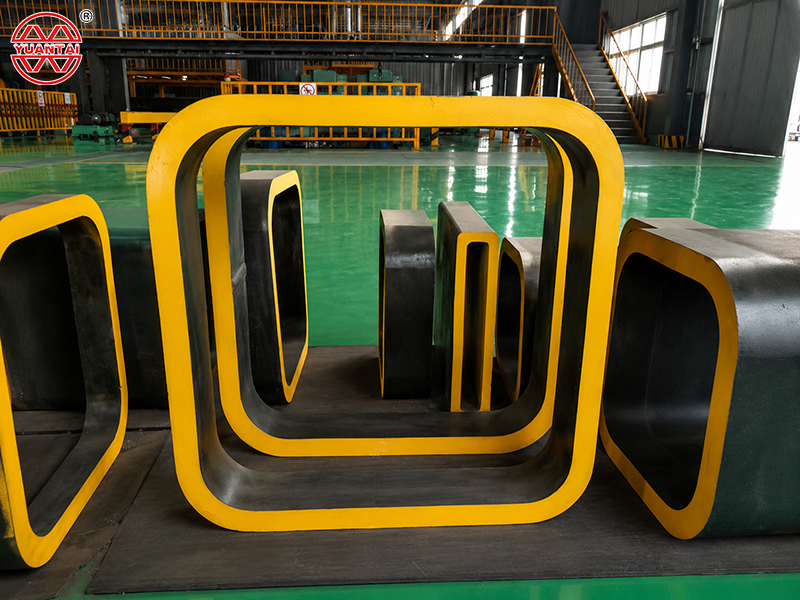
When custom structural designs call for massive hollow structural sections exceeding 1000 mm, procurement departments frequently struggle with manufacturing limitations. In many global regions, contractors are forced to manually weld four individual steel plates into built-up box sections on-site, or combine multiple smaller tubes into complex trusses. This makeshift fabrication requires heavy field splicing, inflating labor costs and extending non-destructive testing schedules. Additionally, dense field weld seams pose long-term stress fatigue risks. While heavy-wall LSAW steel pipe is highly reliable for fluid transmission, turning an ultra-thick round profile into a giant square tube requires dedicated, large-scale industrial capability that very few global mills possess.
Breaking Size Limits with 1550 x 1550 x 80 mm Square Hollow Sections
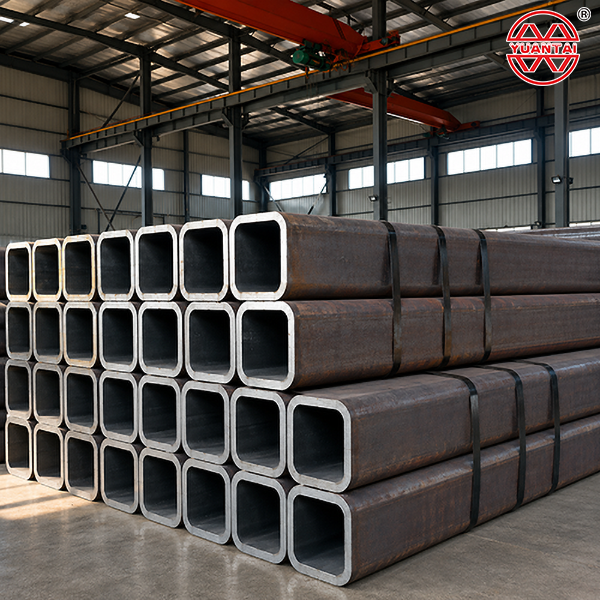
To bridge this critical supply gap, Yuantai Derun has upgraded its heavy structural steel tubing production matrix. Yuantai Derun has gone beyond the limits of traditional cold-forming processes. The company can now produce one-piece square hollow sections with sizes up to 1550 × 1550 mm and wall thicknesses reaching 80 mm. These extra-large SHS and RHS profiles give buyers a reliable, factory-made solution, reducing the need for on-site welding and making installation and material handling much more efficient.
The Engineering Logic: JCOE and Round-to-Square Technology
Successfully producing an 80 mm wall thickness square pipe requires an innovative manufacturing approach. Yuantai Derun breaks away from standard direct cold roll forming by combining the heavy-plate JCOE forming process with advanced Round-to-Square technology. The plate is first pressed step-by-step into a premium straight-seam circular profile using high-tonnage JCOE equipment and double-sided Submerged Arc Welding . The ultra-thick round tube is then formed step by step into a square or rectangular shape using precise roll-forming. This gradual shaping process helps distribute stress evenly across the pipe, reducing the risk of corner cracks and avoiding brittleness at the edges.
Quality Assurance: Standards and Verification
For heavy structural parts used in key load-bearing systems, strict quality control and full material traceability are essential. After forming and welding, each 1550 mm section goes through a controlled post-weld heat treatment process. This step helps refine the internal structure of the steel and removes most of the residual stress from production, improving dimensional stability and reducing the risk of hydrogen-induced cracking.
The production process includes automated ultrasonic and radiographic testing to fully inspect the weld seams. These pipes meet the latest GB/T 6728-2025 standard and are designed to align with international grades such as EN 10210 S355J2H and ASTM A500 Grade B/C, ensuring stable strength and good performance in low-temperature conditions. Each batch comes with a Mill Test Certificate and QR code verification, giving buyers and engineering teams full traceability and confidence in product quality for demanding structural projects.
Post time: Jun-08-2026